Postings

Showing posts with label beyond words. Show all posts

Wednesday, February 05, 2025

Semi-Virtual Affinity


How could I forget you?

A memory of one of the most wonderful things in life

For sure not just a random-access memory, nor a memory on the go

But something that lingers on - a secondary storage - whether in harmony or in strife


To the idea of you, a part of me reaches a state of adhesion

Configured and knowledge engineered when there's abundance of interaction

Looking at the degree of familiarity, as I see it, it's in the quite thorough echelon

Even without verbal I/O, and yet there's this emergence of an indelible keystone


With thousands of days of being physically far away and less exchange of data and sentiment

Been wondering if multiple test iterations have resulted to someone substantially different

And then finally, we've met each other again, albeit in a not-so-happy moment 

T'was so candid indeed, I believe you're unmarred with anomalous disparities - still endearingly equivalent


A toast and a hope to a well-spent life, upbeat to know that you're doing well

Reminds me that we are very much human

I feel welcome and cared for - I hope you feel the same - in being humans we also try to excell

Please stay under the same essence - invariants do exist in proving that amidst any change, in something meaningful, we can still stand


Thursday, January 11, 2024

Remembering the 8th of January 2024


...And, it’s nice to be back doing this stuff, probably just one article after N years; and what made me remember that I have a created a writing repo somewhere is that… *drum roll*…

a *Hayao Miyazaki* film finally made its way into Philippine theaters!


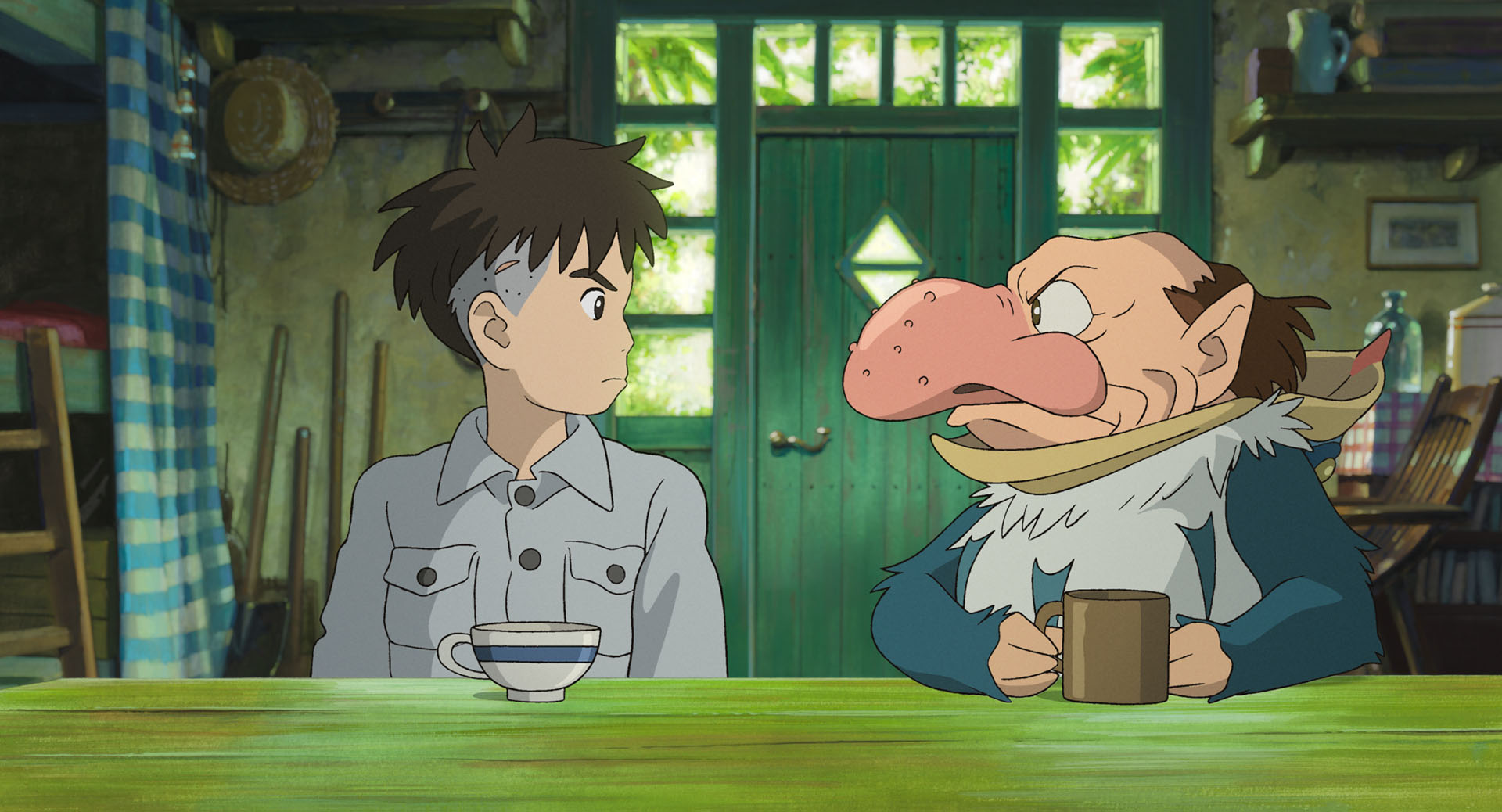
Credit: Studio Ghibli from the film "The Boy and the Heron" (https://www.ghibli.jp/works/kimitachi/) 

I find this surreal, coming from a person who has been fond of many Studio Ghibli films, and with this supposed “final” Miyazaki film – wishing on that big glowing rock coming from outer space, that there will be another film release after this, as he is reportedly coming out of retirement again! – The Boy and the Heron, I believe, is among his cinematic gems.


It is visually impressive; and surprisingly, I feel that the movie, through the energy level of the animation here, was created at the height of Miyazaki’s prowess.  I even have this impression that “The Wind Rises” is more like the “final” film than “The Boy and the Heron.”


The emotional moments, that a viewer may experience among Ghibli’s finest, may not be as evident here, but instead they are compensated with more thought-provoking scenes, with lots of figurative stuff that can even surpass those present in “Spirited Away.”


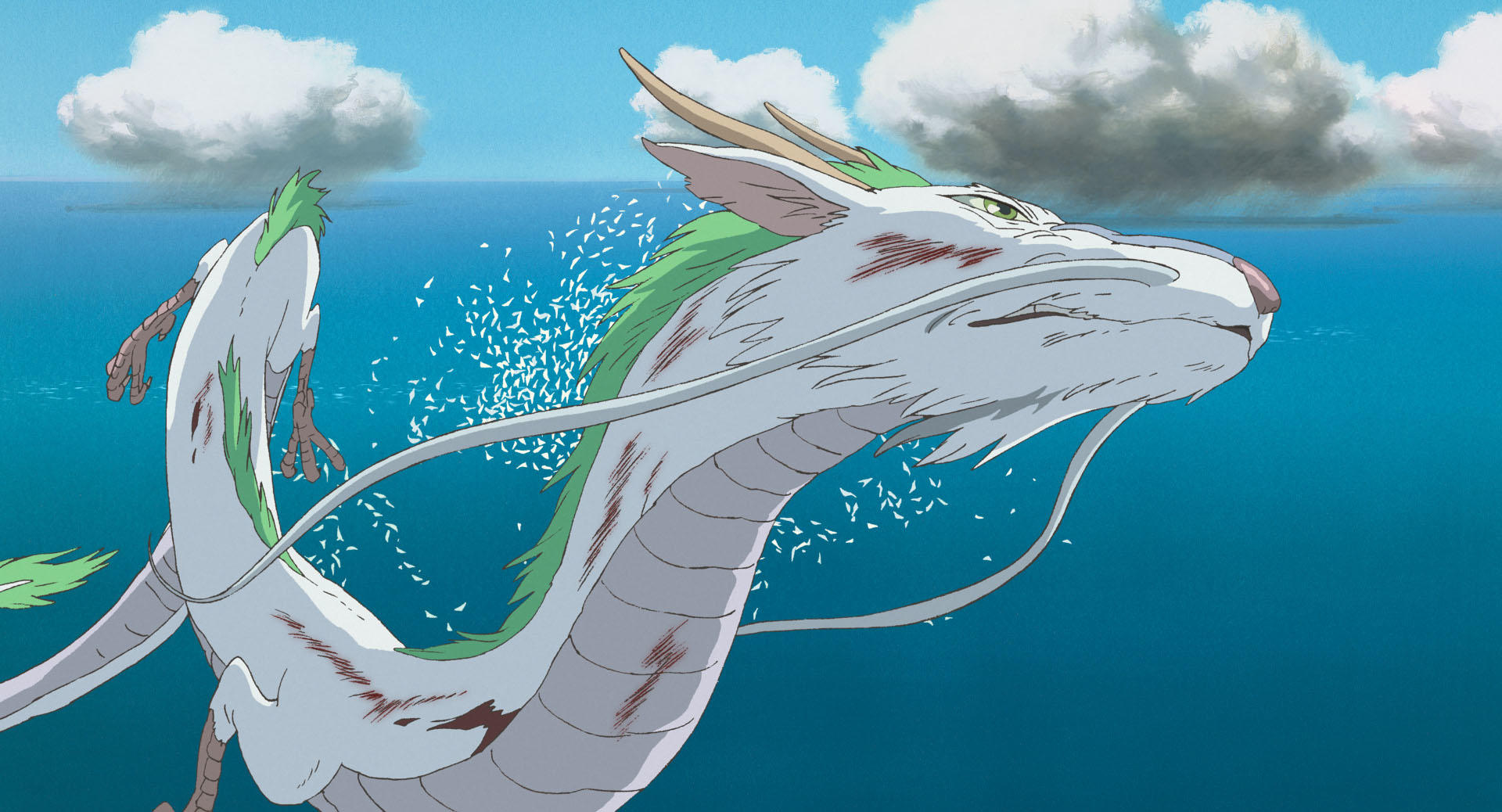
Credit: Studio Ghibli from the film "Spirited Away" (https://www.ghibli.jp/works/chihiro/)

I believe this is Miyazaki’s most complex film, and the world it presents can feel convoluted.  However, if you have been familiar with many of his films and with a glimpse of Miyazaki’s life, I believe “The Boy and the Heron” will have more profound impact on the viewer.  It is his most philosophical and most personal film as well.


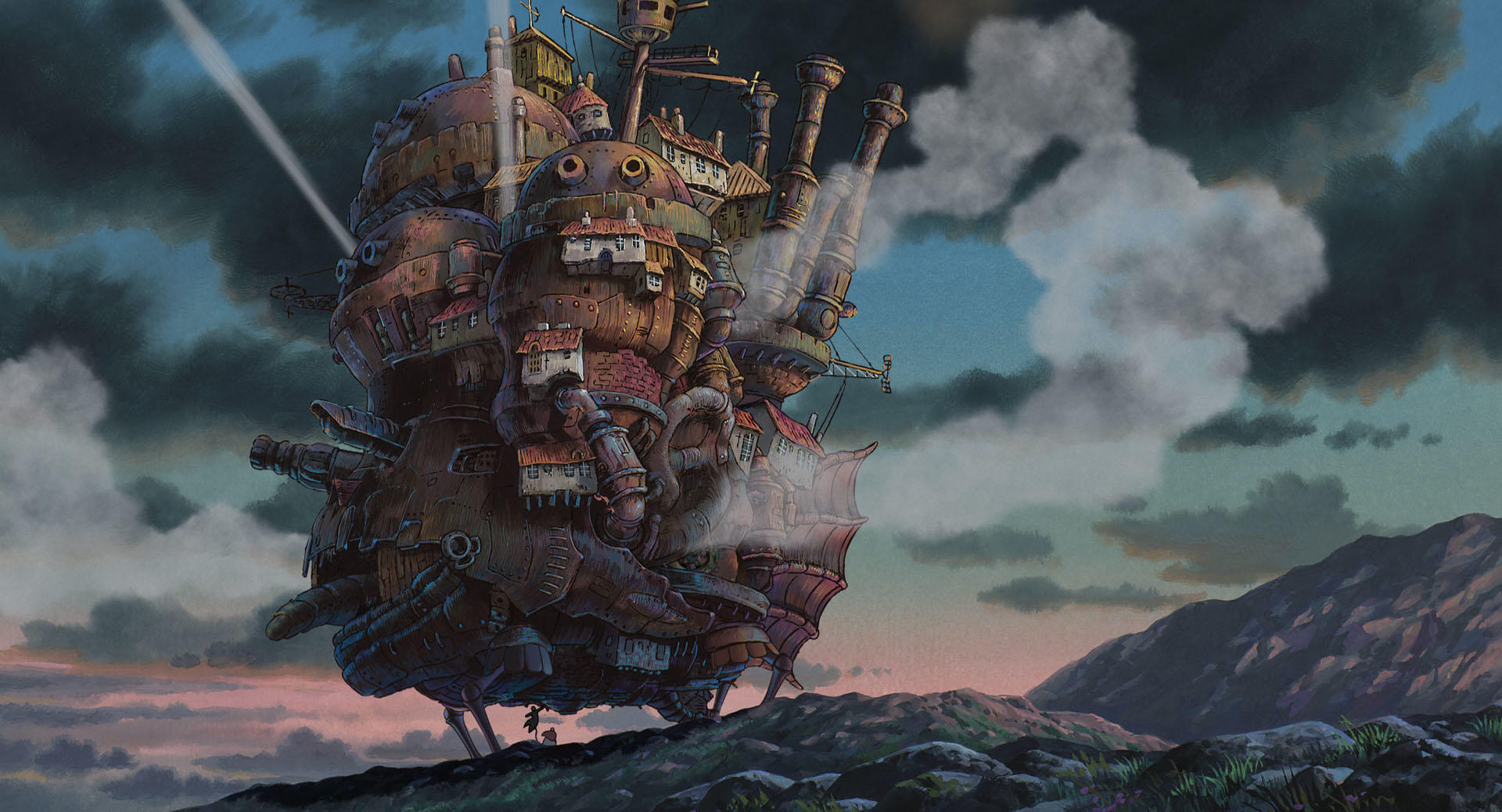
I consider “The Boy and the Heron” as one of my favorite Ghibli films, along the lines of “Howl’s Moving Castle” and “Spirited Away.”


Credit: Studio Ghibli - from the film "Howl's Moving Castle" (https://www.ghibli.jp/works/howl/)

I would like to remember that day, 2024.01.08 (PH Time), when a Studio Ghibli and Hayao Miyazaki film finally made its way into Philippine cinemas, and to commemorate that, I have started reading a book – although with unrelated story as the story in this movie is original – from which the title of its Japanese release was referenced: “How Do You Live?” by Genzaburo Yoshino.  So far so good, as it is thought-provoking, and I hope to finish reading it as soon as possible.


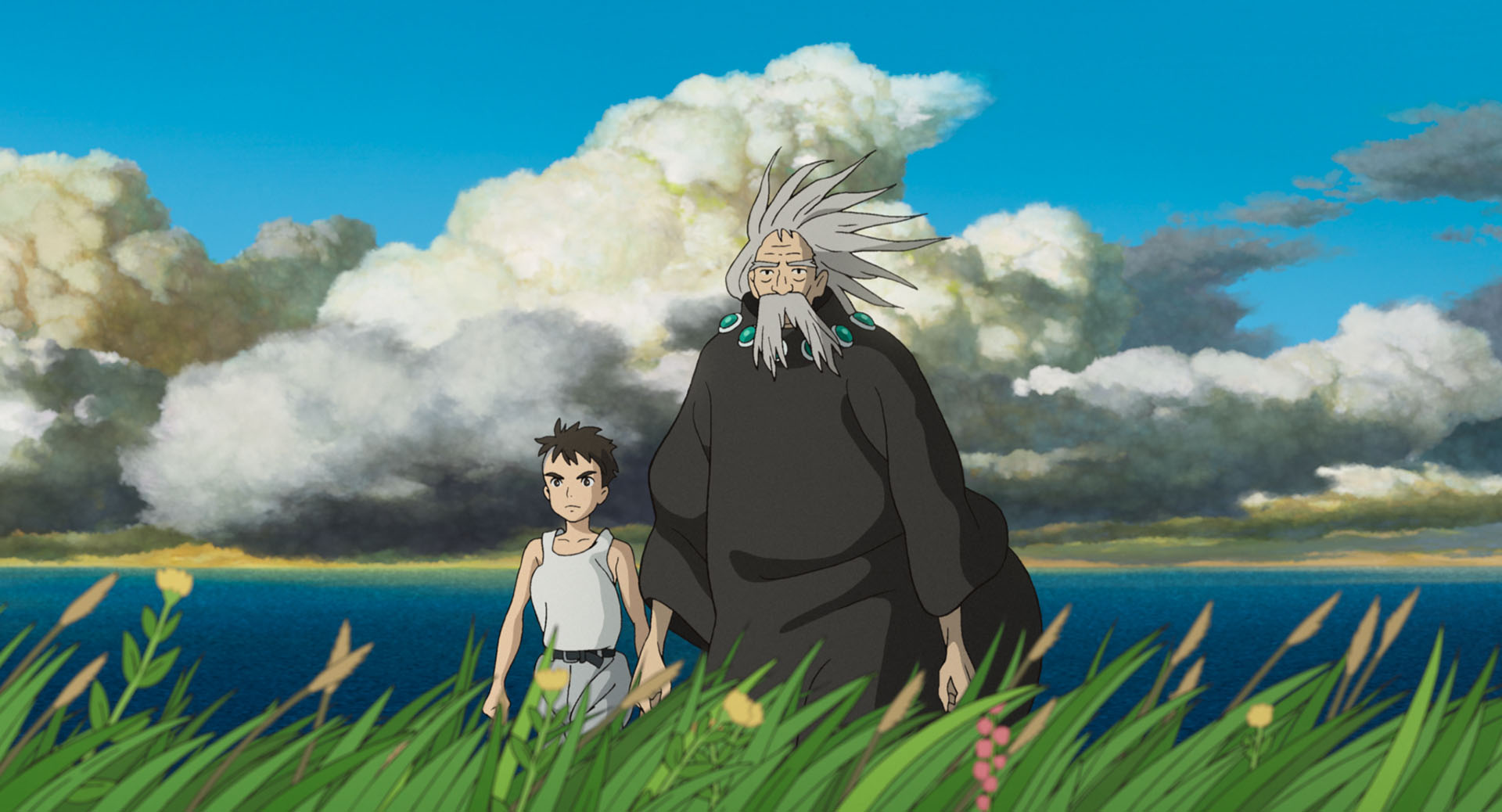
Credit: Studio Ghibli - from the film "The Boy and the Heron" (https://www.ghibli.jp/works/kimitachi/)

At the end part of the movie, I found myself staying in the cinema under a contemplative mode, while listening to the song "Spinning Globe" during the end credits.  One may feel some uneasiness with the film's conclusion, and I believe the song served to console the viewers as well (and the news that Hayao Miyazaki is working on his next film).

Spinning Globe by Kenshi Yonezu 

And by the way, that Golden Globes win for the Animated film category is well deserved! (That was tough competition against Spider-Man Across the Spider-Verse, which is another great animated film)


Sunday, June 25, 2017

wal'art

Some walls are boring; that's why some people put something on them, and then, you may or may not like what they did put on them.  Take a look at these (boring) walls...

WAL'ART                                                 gertics11


They must be boring so that it has become to be what it is right now, and some may call these as works of art.  But why?  They are just upgraded versions of our doodling during childhood; and what the heck, I can do better by just drawing a single line on a white paper using a pencil; and then call my work a sketch using charcoal.  Also when one gets mad, one can even come up with a unique abstract work that no artist can replicate (and that includes oneself).  Then, another argument comes up to refute the work, and there we go, we have a full-blown debate that might soon deteriorate to a fight.

So, what is art? Is it something that we should rationalize?  At some point, yes, but I think as we go along, we might realize that what weighs more is the unique experience that we have after we had met the artist halfway.  This is also about our subjective connection towards the work; and in this case, it would be actually foolish, especially on the more abstract renditions, if we insist on our understanding and criticism of the work over those held by another.  If I'm the kind of a person that tend to rationalize everything, then art would be something useless; definitely, because it is something that I cannot understand or fully rationalize.  Art leans more on the subjective side, so in this case, we can say that every human being is artistic.  So next time around, say to your frustrated friend, "Everything will be all right, pal. Every person has artistic ability, and soon you will find your proper audience."  (And then, both of you ended up on a tour of different mental institutions.)

Though art tells something about how the artist sees the world at a certain point in time, it is indeed something that we don't really understand.  In this case, if we don't understand one another, at least we can give a compliment; well, depending on the degree of misunderstanding, e.g. "You are such a (great) piece of artwork."

Art has something to do with personal connection, e.g. between the artist and the prospective viewers.  In this case, whether the artist recognizes it or not, there is responsibility involved, especially when presented to a wider audience.  (What if the whole world finds the work offensive? You bet, the outer space is the place to be.)  Now, this is where the responsible and the not-so-responsible artwork enters, and then the boring and the not-so-boring.  Would it be great if we have the not-so-boring and at the same time responsible art pieces scattered around? (But hey, aren't the responsible ones considered *boring* these days?)

Let's face it; there are mediocre art pieces and then the excellent ones. (You gotta be kidding me; those stereotypes are subjective too!).  In the case of the so-called excellent ones - well, like diamonds - they are kind of rare and endured the test of time.  They are considered interesting pieces of work.  Hmm, define interesting?  Interesting means that the work gives greater possibilities for interpretation. (Now, I'm getting more convinced that a piece of dirt on a white paper is one of the most interesting pieces of art ever.)

Think about the Bible.  As the time went on, it has become more and more interesting, and then it endured the test of time, and even more.  From a religious perspective, it has a divine origin; so in that respect, it is a special kind of "art work".  Although it did not dramatically fall from the sky in its current whole form to attest its divine origin, it came from a chorus of several inspired "artists", all of them fallible entities of nature.  By taking the religious perspective, they are fallible entities that came up with extraordinary harmony of gist (you bet; that's the divine part).  Since it is by nature a religious piece of "art work", we should meet the "artists" of the Bible halfway first, meaning it is best to talk to all of them if ever any of them is still alive. (Oh, sorry; I think there's none. So the unbroken lineage of descendants should work.)  And then if one has done that, then it would be apt to find that subjective connection to the work as a whole.

Now going back to those walls that we have here, we should ask the artists first why the walls are so boring, and why draw a big mess on top of them.  Then, we form that subjective connection to the walls, oh sorry, to the big mess on top of them; oh sorry again, I mean, to the art work drawn on them. (Kidding aside, I find these graffiti works cool.)

Thursday, June 22, 2017

ode to good ol' wall...

Photo Credit: gertics11


enough said...
but the best wall goes to:

Photo Credit: gertics11


the one adored by the best tree of the season, which attempted to hide in front of it and made us believe that it bore an extraordinarily out-of-the-season fruit entrusted to a lamp post.

Sunday, March 22, 2015

the mouse and the ninja

thoughts about American and Japanese animated films

Two of the countries where the animation industry flourishes are Japan and the US.  For those who watch a lot of films coming from these two countries may recognize striking differences.  First thing that may come to your mind is the cultural aspect, but aside from this, we also get to notice the artistic and technical differences.

photo credit: dennis.pope85  "Ratatouille" (from flickr: license - no changes
US animated films have unprecedented technical achievements in 3D, led by Pixar Animation Studio.  Some of the remarkable ones are 'The Incredibles', 'WALL-E' and 'Toy Story 3'.  Because of 3D, we notice the visual realism in terms of the environment and the characters.  Take for example the movie 'Ratatouille'; we almost experienced the real Paris and rural France visually.  For those who have seen the animated films of the 1990's, apart from the technical achievements, we also get to notice the aesthetics; the most remarkable of them is the music, mostly found in Walt Disney animated films.  We also have popular songs coming from these films.  In terms of the story - the stories are mostly good - the issues tackled in the film are typically candy-coated and softened versions.  One of the reasons is that animated films in the US are intended to be universally appealing, and the top target viewers are children.  Hence, we get to see a lot of "cute" characters such as 'Nemo' and 'Wall-E'.

photo credit: Alejandro Molina B   "Wall-E" (from flickr: license - no changes)


Maxstew7's Cosplay Photography (flickr: license - edited)
In the case of Japan, for those who have seen feature-length films aside from the usual anime series, one may have experienced 're-thinking' of the animation genre.  Of course, Japanese animated films also appeal to the younger audiences, but they have themes that can be appreciated more by adults.  Unlike US animated films, they tend to tackle mature themes and complex story lines that are usually depicted in live-action films.  Take for example 'The Millennium Actress' and 'Grave of the Fireflies'.  If you have seen these films, you might have adjusted your thinking about the animation genre.  The spectrum of themes is wider when compared to its American counterpart.  Stories may range from ordinary daily life, take 'My Neighbor Totoro' as an example, to the fantastic depiction of the environment and the characters, as examples we have 'Spirited Away' and 'Howl's Moving Castle'.

photo credit: markheybo    (flickr: license - edited)
Technically speaking, Japanese animation is characterized mostly by hand-drawn style; 3D is also used but mainly intended to artistically enhance the hand-drawn effect.  We see this in 'The Secret World of Arrietty', which is one of the most visually stunning animations around.  American animation also uses the traditional hand-drawn style but since the past decade, it has resorted mainly to the 3D medium.  The case for Japanese animation is different; it is still mainly hand-drawn.  Given that Japan has also the technology and capability to do 3D, I think the reason is artistic; and because of that, the films did have a classic effect, relative to the current popularity of 3D movies, which is mostly achieved by Studio Ghibli.  A recent example is 'The Tale of Princess Kaguya'.  Instead of taking the technically progressive direction, we get to see sketch-like and simple rendering of the story.  However, from the artistic point of view, the film is in no way inferior to the more technically advanced animated films.

Wednesday, October 09, 2013

when many things turn out well

... that's what we also get from getting the best out of the situation

Photo credit: Triangle Workshop (via flickr)

... the art of victory lies on the struggle that has taken place

Photo credit: Jeffrey Pott

Photo credit: Jeffrey Pott

... it is valued according to the quality of the struggle

Photo credit: Triangle Workshop (via flickr)


“When I despair, I remember that all through history the way of truth and love have always won. There have been tyrants and murderers, and for a time, they can seem invincible, but in the end, they always fall. Think of it--always.”
-- Mahatma Gandhi

Saturday, October 05, 2013

when many things didn't turn out well

... get the best out of the situation:

a restaurant with so many unsatisfied customers
Image credit: Elyse Bova (via photobucket)


an uprising against the latest weather disturbance
Image credit: Seth McGonigal (via photobucket)

somebody went nuts about the air-conditioning system (cold season is coming soon anyway)
Image credit: Tzi Ming (via photobucket)


futile thought experiments (nothing gets wasted actually)
Image credit (also for the artwork): Joe Meiser (via photobucket)
"Transcribing-Transposing"


a carpenter has gone wacko
Image credit (also for the artwork): Joe Meiser (via photobucket)
"On Shadows and Realities"
The world doesn't run out of opportunities to be creative.  Installation art arises from the rubble.

Wednesday, October 02, 2013

paint job gone wrong

It's simple; when a paint job goes wrong, then it becomes a painting.

by: drain (via flickr) by: ario_ (via flickr)
by: Mark von Minden (via flickr)

Monday, September 09, 2013

far beyond: about going further

This is supposedly a song with the lyrics attached below. 
Let's just assume that it works.

Sorry, your browser doesn't support playing the attached file (The Odd Dawdler) in this post.

Instrumental track: "Far Beyond" (05:30), 2013


Far Beyond

when the wind blows
there the sky goes
in the glist'ning day
we will walk the way

beyond what you can see
eagle's flying spree
we will walk the way

yeah, yeah, yeah, yeah, yeah, yeah, yeah
hmmm, hmmm, hmmm, hmmm, hmmm, hmmm, hmmm-mmm
glide through the windy sway


when the river flows
there the rapid roars
through the waves of the sea
we'll shout our hearts to say

tell the world all the way
how much you mean to me
we'll shout our hearts to say
you mean a lot to me
like how God cares for thee

yeah, yeah, yeah, yeah, yeah, yeah, yeah
hmmm, hmmm, hmmm, hmmm, hmmm, hmmm, hmmm-mmm
loud, clear as it can be

always a lot of more
more like a sparkle,
more of a twinkle
far beyond, over and over
the expanse of the universe

always a lot of more
we'll walk to infinity
this isn't finite
more than the pace, beyond the flight

you and me
tribute to the Great One
infinite One, fa-a-a-ar (far) beyond

when the land holds strong
the earth sings a song

every single day
we'll hold on solidly
move through the mystery

when the wind blows
there the sky goes
in the glist'ning day
we will walk the way

when the river flows
there the rapid roars
through the waves of the sea
we'll shout our hearts to say

tell the world all the way
how much you mean to me
we'll shout our hearts to say
you mean a lot to me
like how God cares for thee

yeah, yeah, yeah, yeah, yeah, yeah, yeah
hmmm, hmmm, hmmm, hmmm, hmmm, hmmm, hmmm-mmm
hmmm, hmmm, hmmm, hmmm, hmmm, hmmm, hmmm-mmm-mmm
far beyond forever

(c) gertics2013

Monday, August 19, 2013

stigmergy: follow the leader

WARNING: This is an attempt to be a little bit technical.

We now describe the stigmergy among ants, and we present three models: A, B, and C.  The first model, model A, is a set of equations.  This model is considered scientific while models B and C are non-scientific (not sure if B and C fall under the "artistic" category though).

A:
Model A is an abstraction of the foraging behavior of the ants called the ant system.  Imagine that there is an undirected graph G = (V,E) such that V is a set of vertices or points and E is a set of edges.  The state transition rule is given by the following equation:

Equation 1 is the probability that the ant chooses to move to point s given its current position at point r. Note that r and s are elements of V with (r,s) is an element of E.
Through these equations, there is an indirect form of communication through the amount of pheromone on a particular trail, a form of memory not locally stored within the individual ants, and this communication is called stigmergy.

B:

C:
Instrumental track: "The Odd Dawdler" (03:40), 2013
Sorry, your browser doesn't support playing the attached file (The Odd Dawdler) in this post.

Saturday, August 17, 2013

sail, sail, sail


Instrumental track: "In Peril" (04:18), 2013

Sorry, your browser doesn't support playing the attached file (In Peril) in this post.

Thursday, August 15, 2013

Way of the Wind

A tree on a high cliff faced a strong wind resulting to the dispersal of its leaves into the countryside.  The leaves moved according to the way of the wind and glided above a waterfall, a dense forest, and then a vast plain.  Some of them landed on a river, and the river carried them for several miles until they reached the sea.  The story can go on and on until probably a surviving leaf has circumnavigated the whole world.  So this is an attempt to capture the moment of the tree's confrontation with the wind.

Instrumental track: "Way of the Wind" (03:11), 2013

Sorry, your browser doesn't support playing the attached file (Way of the Wind) in this post.