Wednesday, February 05, 2025

Semi-Virtual Affinity


How could I forget you?

A memory of one of the most wonderful things in life

For sure not just a random-access memory, nor a memory on the go

But something that lingers on - a secondary storage - whether in harmony or in strife


To the idea of you, a part of me reaches a state of adhesion

Configured and knowledge engineered when there's abundance of interaction

Looking at the degree of familiarity, as I see it, it's in the quite thorough echelon

Even without verbal I/O, and yet there's this emergence of an indelible keystone


With thousands of days of being physically far away and less exchange of data and sentiment

Been wondering if multiple test iterations have resulted to someone substantially different

And then finally, we've met each other again, albeit in a not-so-happy moment 

T'was so candid indeed, I believe you're unmarred with anomalous disparities - still endearingly equivalent


A toast and a hope to a well-spent life, upbeat to know that you're doing well

Reminds me that we are very much human

I feel welcome and cared for - I hope you feel the same - in being humans we also try to excell

Please stay under the same essence - invariants do exist in proving that amidst any change, in something meaningful, we can still stand


Thursday, January 11, 2024

Remembering the 8th of January 2024


...And, it’s nice to be back doing this stuff, probably just one article after N years; and what made me remember that I have a created a writing repo somewhere is that… *drum roll*…

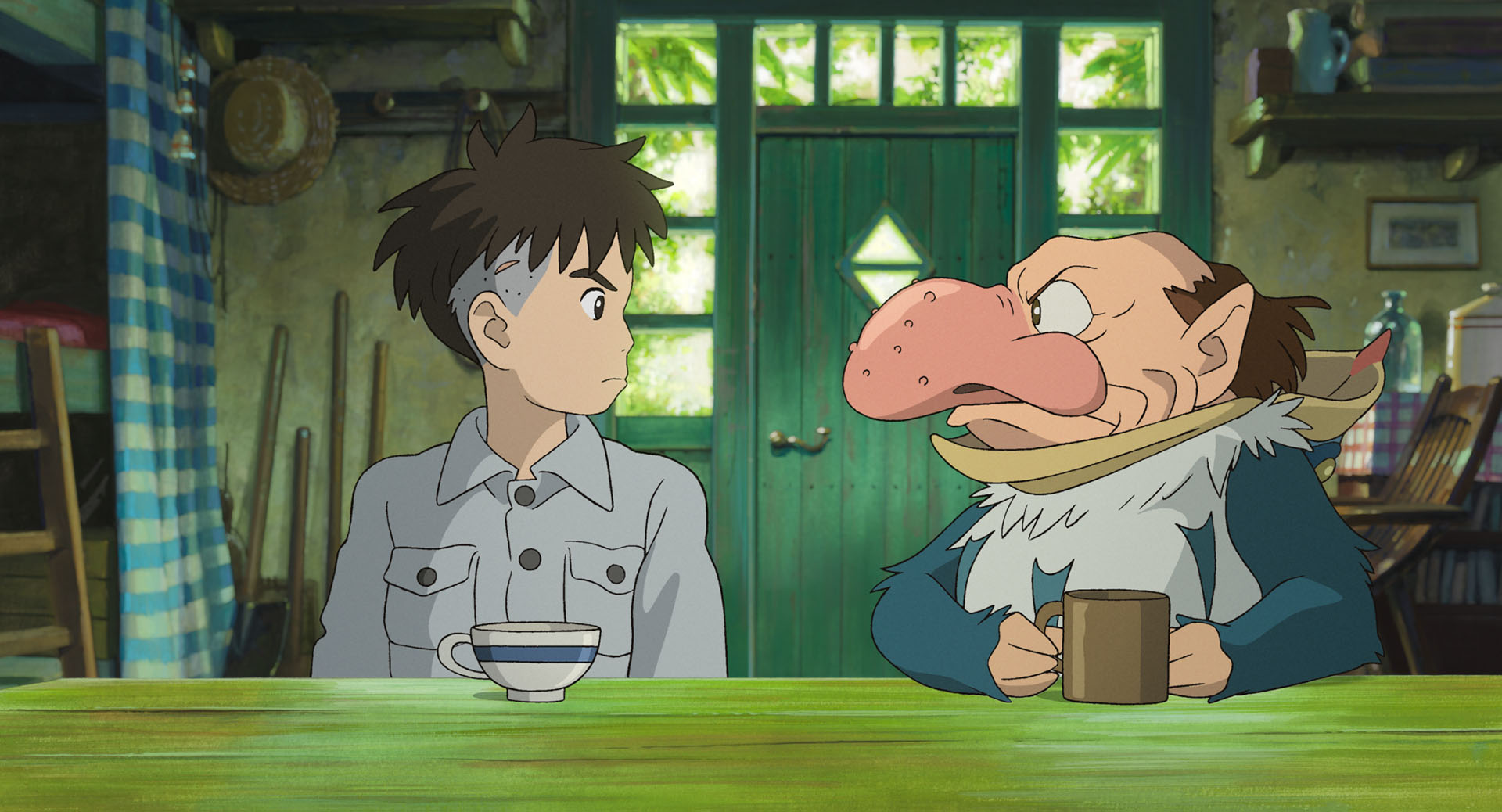
a *Hayao Miyazaki* film finally made its way into Philippine theaters!


Credit: Studio Ghibli from the film "The Boy and the Heron" (https://www.ghibli.jp/works/kimitachi/) 

I find this surreal, coming from a person who has been fond of many Studio Ghibli films, and with this supposed “final” Miyazaki film – wishing on that big glowing rock coming from outer space, that there will be another film release after this, as he is reportedly coming out of retirement again! – The Boy and the Heron, I believe, is among his cinematic gems.


It is visually impressive; and surprisingly, I feel that the movie, through the energy level of the animation here, was created at the height of Miyazaki’s prowess.  I even have this impression that “The Wind Rises” is more like the “final” film than “The Boy and the Heron.”


The emotional moments, that a viewer may experience among Ghibli’s finest, may not be as evident here, but instead they are compensated with more thought-provoking scenes, with lots of figurative stuff that can even surpass those present in “Spirited Away.”


Credit: Studio Ghibli from the film "Spirited Away" (https://www.ghibli.jp/works/chihiro/)

I believe this is Miyazaki’s most complex film, and the world it presents can feel convoluted.  However, if you have been familiar with many of his films and with a glimpse of Miyazaki’s life, I believe “The Boy and the Heron” will have more profound impact on the viewer.  It is his most philosophical and most personal film as well.


I consider “The Boy and the Heron” as one of my favorite Ghibli films, along the lines of “Howl’s Moving Castle” and “Spirited Away.”


Credit: Studio Ghibli - from the film "Howl's Moving Castle" (https://www.ghibli.jp/works/howl/)

I would like to remember that day, 2024.01.08 (PH Time), when a Studio Ghibli and Hayao Miyazaki film finally made its way into Philippine cinemas, and to commemorate that, I have started reading a book – although with unrelated story as the story in this movie is original – from which the title of its Japanese release was referenced: “How Do You Live?” by Genzaburo Yoshino.  So far so good, as it is thought-provoking, and I hope to finish reading it as soon as possible.


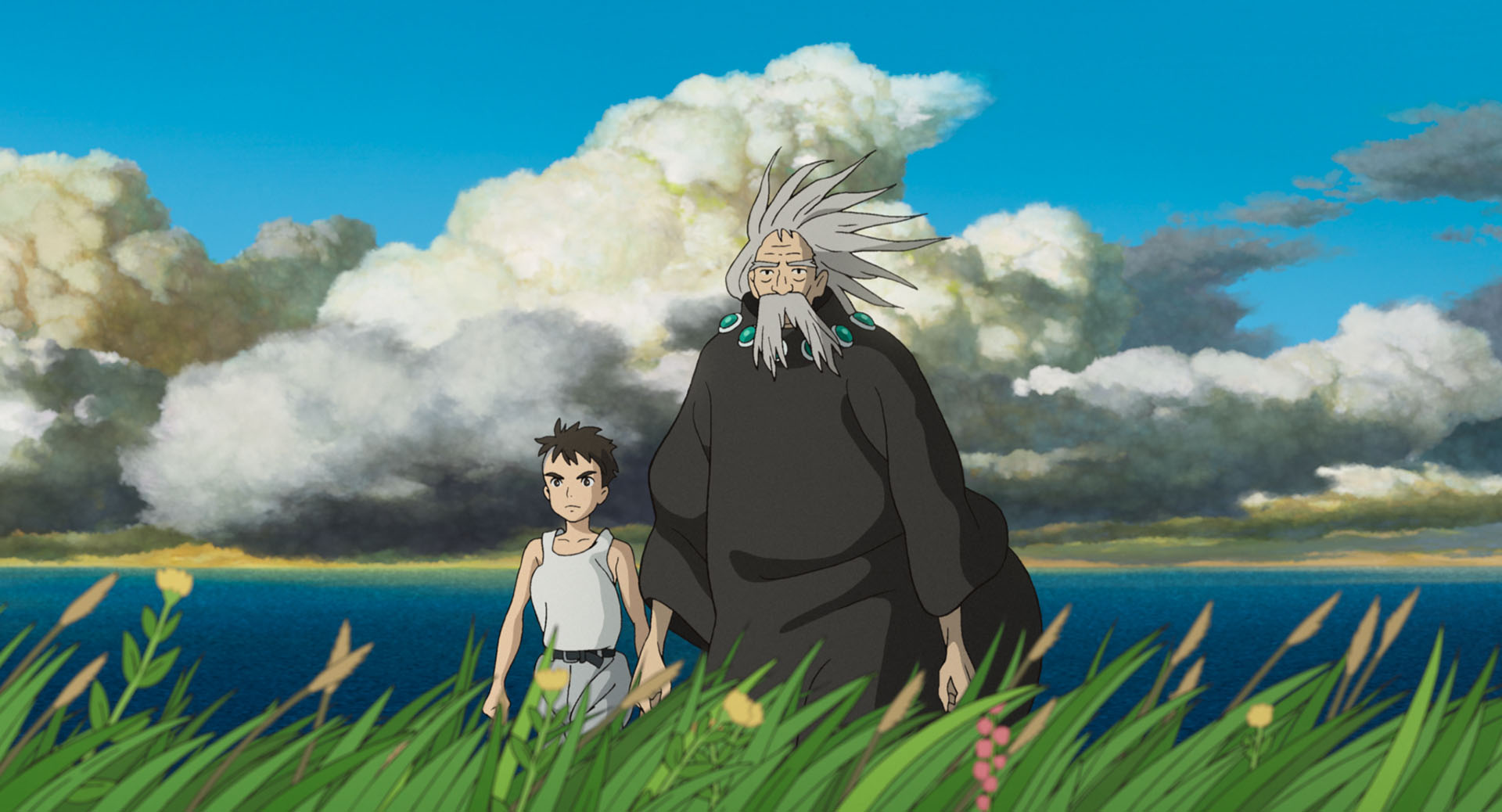
Credit: Studio Ghibli - from the film "The Boy and the Heron" (https://www.ghibli.jp/works/kimitachi/)

At the end part of the movie, I found myself staying in the cinema under a contemplative mode, while listening to the song "Spinning Globe" during the end credits.  One may feel some uneasiness with the film's conclusion, and I believe the song served to console the viewers as well (and the news that Hayao Miyazaki is working on his next film).

Spinning Globe by Kenshi Yonezu 

And by the way, that Golden Globes win for the Animated film category is well deserved! (That was tough competition against Spider-Man Across the Spider-Verse, which is another great animated film)


Thursday, March 08, 2018

it doesn't seem to make any sense : either nonsense or not getting the sense

talk about some far-fetched sense : on the origin of life on Earth
---

To state the obvious, the human brain is the most powerful natural brain on earth.  It is curious that being the #1 top-performing brain in the world, it has a very big gap in terms of the things that it can do over the #2 brain on the animal brain list.  Assuming that there has been a fair game of developing different types of brain from the same set of resources, one can say that the game's current state is highly anomalous.  The human brain is a quintessential outlier relative to the set of naturally thriving brains today.  Adding more damage to this almost "whitewash game" is that this brain is capable of designing artificial brains (i.e. A.I.).  The development of these factitious brains tries to match what the natural human brain is capable of, or even surpass it.

After many years from now, mankind maybe capable of transporting these brains to other prospective worlds in space; and if these are "ultra sophisticated" enough, e.g. self-replicating and capable of evolving on its own under the environmental conditions where it is designed to thrive (yes, designed; i.e. ensuring with the highest possible probability that a biological system will still develop under the harshest possible factors in that alien world, e.g. self-assembling lego parts to create different "living" creatures - somewhat an open-ended result as long as the lego parts keep on thriving), then a different biological system will develop in that world, not necessarily similar to that of the Earth as we know it.  Think about a chain reaction of artificial brains landing on different worlds in the universe.  A brain that developed in a certain world has evolved into something that is capable of creating another brain and then might be interested to propagate it to another alien world.  In this case, this is even beyond what Star Trek or Star Wars has depicted.  That chain reaction is in itself a quandary, and borrowing terms from mathematics, each brain should still have an "origin" for that "chain line" (from the "number line").  Think about the number line.  What is considered to be observable is just a portion of that line; but then the other portions are not necessarily falsehoods, and they cannot be even dismissed in an instant as non-existent.

Monday, October 16, 2017

on the plight of dunkirk

With the Hollywood film year about to end, Dunkirk still stays inside my head as one of the year's best (hey, definitely it will standout considering that you have watched only one of those less crappy films this year). Well, it's not a bad thing, considering its quality being comparable to some of the acclaimed films in the previous years, e.g. "A Separation", "Zero Dark Thirty", "12 Years a Slave", "Lincoln", etc.  One of the reasons is that it is different from other World War II films, and it takes a different perspective when compared to the likes of "Saving Private Ryan" and "Letters from Iwo Jima".  Will it win Best Picture at the Oscars? It has a high probability that it will get nominated, but I think its chances of winning is actually uncertain. 

One reason is that it might be labeled as one of those bland films among the Academy voters.  They might find it inglorious in the emotions department, and would rather view it as something more of a technical film; and at the end of the day, throw multiple awards in the technical department.  So if a more dramatic and more emotionally satisfying film pops up at the end of the year, its chances of winning will be significantly lowered.  Another reason is that it doesn't actually have a well developed "personal" viewpoint in it that will help the voters find the perspective of the characters compelling.  So if a more personal and also substantially technical film comes up at the end of the year, it's then a no-win for Dunkirk.  Does it really matter? I think not.  Whether with an Academy win, intrinsically, I think Christopher Nolan's Dunkirk is still a film to beat in many years to come.

So how about the animated film department? Sure, "The LEGO Batman Movie" is a fun movie, and a really good one as well.  However compared to last year's very competitive year for animated movies, in which many films in the lineup deserve to be considered as top animated film, it seems that it may not be as competitive this year.  The upcoming "Coco" film from Disney/Pixar - with Lee Unkrich from "Toy Story 3" around - is potentially a film to beat.  Otherwise, "Ferdinand" might also sneak in, together with other foreign animated films like "The Breadwinner", which has a weighty synopsis, and probably, Hiromasa Yonebayashi's "Mary and the Witch's Flower" under Studio Ponoc, which consists of almost everyone who previously worked at Studio Ghibli.

Tuesday, August 08, 2017

the coldest in the middle of summer

Photo Credit : Conservation of Arctic Flora and Fauna (flickr; license; no edits)  Yakutsk, Russia

As the latitude gets higher, meaning as we go more northerly, the climate is getting colder until we reach Santa's factory outlet.  So, does this mean that the North Pole is the coldest place on Earth or in the Northern Hemisphere?  The answer, however, is a "no".  Although the daily mean from January to March, hovers around -31° to -32°C, and the average low hovers around -33°C to -35°C, these figures are handily beaten by at least three inhabited places 20+ degrees latitude below the North Pole.

Is it still in Canada or in the US state of Alaska? ...Nope. Although the average low in Eureka, Nunavut (in Canada) during February is competitive at -41°C, with a record low of -55°C; the figures, however, are not even considered close.  Snag, Yukon (in Canada) holds the lowest verified recorded temperature in continental North America at -62.8°C [1], while Prospect Creek, Alaska (in US) holds the title as the coldest place in the US when it registered -62.1°C [8].  These figures are close, but the thing is that these places are no longer inhabited.

Let's imagine how cold are these places in terms of the Canadian wind chill index [2]:
-48 to -54 translates into freezing of exposed skin in 2 to 5 minutes, while -55 and colder translates into freezing of exposed skin in less than 2 minutes and was marked as "DANGER!".

And to think that these are indices that consider the wind factor on top of the base air temperature (note the absence of the degree (°) symbol).  How much more if the base temperature is -60°C and below.  In this case, it would mean that the effect of the wind chill index, hovering around in the -70's, -80's or even -100's, would be unthinkable.  (Just saw these -60+°C figures as outside air temperature while traveling on a plane.)

Now, let's meet three of the coldest inhabited places on Earth with a very cold greeting.  If it's not found in Canada or in the US, then we shouldn't forget the rival during the Cold War (although not related to air temperature): Russia.

As many of us might already know, Russia is famous for its bitter winters, particularly the geographic region of Siberia (note the difference with the political region called "Siberian Federal District").  Getting more specific within the Siberian region will lead us to Sakha Republic and three of its human settlements: Yakutsk, Oymyakon, and Verkhoyansk.  Their temperature records are as follows (mean annual temperature figures are taken from 1930-2014 data at their respective meteorological stations [3]):

Yakutsk:
     -9.6°C (annual mean temperature) [3];
     -42.5°C (coldest month mean temperature) [4];
     -64.4°C (record low) [5]
Verkhoyansk:
     -14.9°C (annual mean temperature) [3];
     -47.7°C (coldest month mean temperature) [4];
     -67.6°C (record low) [1][6][8]
Oymyakon:
     -16.0°C (annual mean temperature) [3];
     -47.6°C (coldest month mean temperature) [4];
     -67.7°C (record low) [1][7][8]

Extraordinary.  Even more extraordinary is that these places are inhabited in contrast to the American record holders.  Oymyakon has around 500 inhabitants in 2011; Verkhoyansk has around 1,300 (2010 census); and the amazing major city, Yakutsk, has around 270,000 inhabitants (2010 census).  This makes Yakutsk the coldest city on Earth, while Oymyakon and Verkhoyansk vie for the coldest settlement/village on Earth.  Officially speaking, however, Oymyakon currently holds this title [9] given its record low temperature, but it only beat Verkhoyansk by a mere 0.1°C difference on the records. The figures for the record low temperature were actually questioned and a paper by N. Stepanova in 1958 [1] was published to identify the more reliable figures.  If the record-low figures, set in the years before 1950, still hold until now, then the figures are very close; and one thing for sure we know that these two towns are the coldest inhabited places on Earth, and literally, danger zones during winter.

Humans are indeed hardy species, and it seems that the Russians take the top spot in terms of enduring the extremely cold climate.  Now, what is the reliably recorded coldest place on Earth, regardless of whether it is a permanent human settlement?  In this case, we shouldn't forget a place in Antarctica called the "Vostok Station", around 1,300km away from the South Pole.  Yeah, there goes the Russians again!  At a record low of -89.2°C, it handily beats the Northern Hemisphere records, and it seems that there is an anomaly between our polar regions.  North Pole registered "only" a record low of -50.6°C [8], whereas the South Pole through the US "Amundsen-Scott Station" registered a record low of -82.8°C [8].  There is a 30+ degree difference between the two poles, and the reason behind this is that the stations involved are located at a land mass and in high elevations.  Vostok Station is around 3,488m above sea level, while Amundsen-Scott Pole station is at 2,835m above sea level.  North Pole, on the other hand, is on the Arctic Ocean, and temperatures are recorded through drifting stations of polar expeditions.

So, who gets to visit Santa more often in terms of ship expeditions?  Is it the Canadians? US Americans?  Just get the pattern, and that would lead us to the Russians!  And guess what, the Russian flag was even placed on the ocean floor, where the North Pole is exactly located.  (The thing is that they might have searched for Santa under the ocean as well.)

We have been talking about the coldest inhabited places in the Northern Hemisphere, and this leads us to a question about the coldest uninhabited place in the northern half of the Earth as well, that has regular meteorological observations.  In that case, it is held by the short-lived British "North Ice" research station in Greenland, where the record low is -66°C [8].  If it has been in operation for a long time, then it might have recorded temperatures lower than that, given the elevation of 2,341m above sea level.  If somebody is interested in putting up research stations at the mountains of Alaska and the Yukon territory in Canada, then they are also good candidates for the coldest uninhabited place in the Northern Hemisphere, officially speaking.

Going back to Siberia, how does a below -50°C temperature feel like?  An account from BBC [10] tells us that at -53°C, with just a few minutes outside, pain can be felt on exposed skin, damp surfaces freeze, and the extremities can turn uncomfortably cold very quickly even if covered with layers of thick garments.  It is highly probable that running is necessary from one place to another in order to get to the nearest store.  A visitor will probably get used to that extremely frigid temperature after several days, and will soon find that -20°C is balmy.  So how about -80°C? Did anybody from the Vostok Station tried roaming around? For sure, any exposed skin would mean losing that portion of your body.  In that case, that would be a really good reason to wear an astronaut suit.

Some references:
[1] N. Stepanova, "On the Lowest Temperatures on Earth", 1958.
[2] http://www.ec.gc.ca/meteo-weather/default.asp?lang=En&n=5FBF816A-1#table1
[3] R. Desyatkin, A. Fedorov, A. Desyatkin, and P. Konstantinov, "Air Temperature Changes and their Impact on Permafrost Ecosystems in Eastern Siberia", Thermal Science Vol. 19, Suppl. 2, 2015.
[4] J. Kolbek, M. Srutek, and E. Box, "Forest Vegetation of Northeast Asia", 2003.
[5] http://time.com/3798383/yakutsk-the-coldest-city-on-earth/
[6] https://www.britannica.com/place/Verkhoyansk
[7] http://cn.worldheritage.org/articles/Siberia
[8] http://www.islandnet.com/~see/weather/almanac/arc2012/alm12feb.htm
[9] http://www.guinnessworldrecords.com/world-records/lowest-temperature-inhabited
[10] http://www.bbc.com/news/world-11875131

Monday, July 31, 2017

even colder stuff : north and seriously north

Many years ago there's a big chunk of Canadian territory up north, called the Northwest Territories.  It comprises of the northern continental Canada and the Arctic archipelago.  As time went on, the region was divided, and the territory called "Nunavut" was formed.  It's an odd name coming from a country with both English and French as their official languages.  Only later did I know that this was actually  a landmark change in the political map of Canada.  The reason is that it is a territory formed for the country's Inuit people. Thus, making it a notable historical development globally, especially involving the world's indigenous people.
Photo Credit: Mark Beauregard (no edits; license)

Much of the Arctic archipelago is incorporated within Nunavut, and as an archipelago, the islands look huge on the map, speaking of Mercator projection. Regardless of that, however, many islands are actually big.  The top 5 islands in terms of area (in sq. km.) are:

  • Baffin - 507,451
  • Victoria Island - 217,291
  • Ellesmere - 196,236
  • Banks Island - 70,028
  • Devon Island - 55,247

Photo Credit : Derrick Midwinter (no changes; license)

The top three are bigger than Luzon, the largest island in the Philippines at 109,965 sq. km. So, one may wonder if they are also densely populated as well.  You bet, no.  In the warmest community of the region, Kugluktuk, the temperature during winter ranges from -15°C to -40°C, and then there's extensive permafrost, meaning perpetually frozen ground, which prevents vertical growth of trees and other plants.  Imagine a large region having this type of climate.  From above, it will look like a vast barren landscape, interrupted by hills and mountains, cut by rivers, and in continental Canada, splattered with numerous lakes.

Photo Credit : Steve Stayles (no edits; license)
Taking a look at the top 5 largest communities - or refered to as municipalities - in Nunavut as of 2016, it would really take a long time, hypothetically, before we could see a sprawling metropolis in the Arctic:

Iqaluit - 7,086
Rankin Inlet - 2,441
Arviat - 2,318
Baker Lake - 1,872
Cambridge Bay - 1,619


Nunavut as a territory covers 1,936,113 sq. km. of land, but the population as of 2016 is only 35,944.   This gives us a density of 0.0186 person per square kilometer; or, if they divide the land among themselves, each person would own 53.9 sq. km. of land, which is the size of a small city.

Photo Credit: Fiona Hunt                             Iqaluit, NU                            (licenseno edits)
Photo Credit: Michael Swan          Rankin Inlet, NU        (license; no edits)

Given this vast land, relatively very small population, and extreme climate, it is indeed impractical to build extensive road networks.  Thus, each of these municipalities has an airport that would connect them to the rest of Canada.  Currently, Nunavut has 25 municipalities; only one is considered a city, which is Iqaluit, and the rest are categorized as hamlets.  It is interesting, however, that they have other categories called "village" and "town".  You may guess it right that these are the previous designations of Iqaluit on its way to being categorized as a "city".

Photo Credit : Mark Beauregard       Arviat, NU               (license; no edits)
The land faces below freezing average temperatures for at least 8 months of the year.  Most of the municipalities experience a mild form of summer from mid-Jun to mid-September, with monthly average high temperatures just hovering between 10°C - 20°C and mostly below 15°C.  On the other hand, the monthly average low is just hovering around 4°C - 7°C for the months of July and August, while it is 0°C - 3°C for the months of June and September.  

From a tropical country perspective, it is at least cold the whole year round.  So are these places within the radar of the worldwide dispersion of fellow countrymen? The answer was actually a suprise yes for me, the first time I knew about it.  So there are Filipinos out there enduring the mostly tundra climate together with the indigenous inhabitants.  They are mostly found in Iqaluit in which they account for around 1% of the city's population.

Photo Credit: Northern Pix           Baker Lake, NU          (licenseno edits)
So, what do we have in store at Nunavut? Well, if you love wilderness in its pristine form, then you have more than a million of square kilometers of untouched land by any human alteration.  The area contains numerous admirable little plants, which endured the extreme cold and desert-like condition due to low precipitation.  It is actually amazing that Nunavut has around 200 species of plants with extraordinary ability of adaptation.  Other than that, thick layers of mosses (considered as flowerless plants) and lichens (well, these are not plants) cover the soil above the permafrost, which allow taller plants to grow. 

Photo Credit : Alan Sim         Cambridge Bay, NU         (license; no edits)
How do these plants survive? Well, apart from genetics - which helped them survive the mostly acidic soil, very low nitrogen content, and of course, the extreme climate - the plants have actually a unique behavior of crowding together to form microclimates that allow photosynthesis to take place.  To name a few, Nunavut has Arctic cotton, Arctic willow (a tree in a tundra region?!), Labrador tea, blueberry, and cranberry.

How about the animals? To name a few, we have the polar bear, seal, walrus, muskox, and we shouldn't forget Santa's animal of mobility, but bigger version than what we saw in the usual renditions: the caribou.  If we include the caribou in the census, then Nunavut can come up with a figure close to 1 million inhabitants, and surely, the film "The Polar Express" isn't exaggerating anything when it comes to their number.

Photo Credit : Derrick Midwinter                    Arctic Cotton                     (license; no edits)
Photo Credit : Amanda Graham                  Arctic Willow                         (license; no edits)
Photo Credit : Derrick Midwinter                   Caribou                             (license; no edits)
Looking for something extraordinary?  Then, look further and seriously north, to Nunavut; and hunt for the Northern Lights as well.  However, the world needs to take care of these lands because when a permafrost melts, it looks extraordinarily disastrous as well.

Photo Credit : UBC Micrometeorology (license; no edits) -- Permafrost Melting